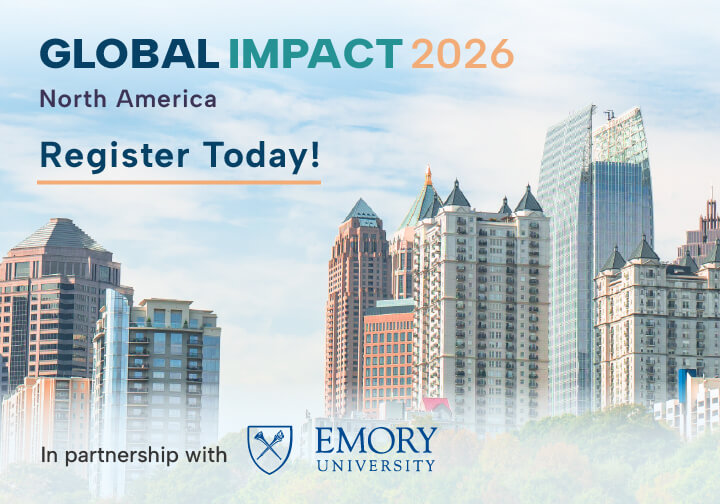
What the Field Is Telling Us: 10 Takeaways from Spring 2026 Conference Season by Andrew Gordon | Apr 20, 2026 | Articles, Homepage Articles, News & Updates, Public By Andrew Gordon, April 20, 2026 Every spring, the international education conference season offers a chance to step back from the day-to-day operations and take stock of where the field actually stands. This spring was no different, except in all the ways it was. I attended the Association of International Education Administrators (AIEA) Conference in Washington, D.C. and the Forum on Education Abroad Conference. And then there was the Global Impact 2026 – MENA — which we had to postpone due to the war in Iran and its impact on the region. More on that below. Three conferences. Two attended. One postponed. All of them clarifying. Here’s what I’m taking away from this season. 1. Forces outside our control are part of the work. Global Impact MENA was scheduled to take place in Abu Dhabi in collaboration with NYU Abu Dhabi. We had planned, had a phenomenal speaker lineup, and were ready. And then the geopolitical situation in the region made it impossible to move forward responsibly. We made the decision to postpone, with a full commitment to return to the MENA region. What it reminded me — what it reminded all of us — is that international education doesn’t operate in a vacuum. We experienced this with COVID, the Great Financial Crisis, Brexit, … the list goes on. We’re experiencing it now with a global political climate that is anything but stable. No matter how well we plan, there are forces outside our control that will impact this work. Building that reality into how we operate isn’t pessimism. It’s professionalism. And it positions us to be nimble and ready to pivot in a way that allows us to still deliver global learning experiences for our students and colleagues despite geopolitics or other forces that have much greater control of our work than we would like. 2. There is a whole new crop of professionals in this field. I’ve attended AIEA and Forum many times over the years. I usually walk into a room at these conferences and know a significant portion of the room. This year was different. New faces and noticeably fresh perspectives on the work. It’s genuinely exciting. Newer professionals are forming their views about what international education is, what it should accomplish, and how it should be practiced. The field’s next decade will be shaped in large part by what new professionals learn in these spaces, and by the mentors and organizations who invest in their development. Mentorship and early professional development – for new professionals at all levels – in these spaces are how institutional knowledge gets transferred and how collectively we move the sector forward 3. The leadership pipeline requires intentional structure and mentorship is part of that. Growing emerging professionals into directors, SIOs, and senior decision-makers doesn’t happen organically. It requires intentional investment of time and resources. And when I look at how much more professionally and perspectivally diverse AIEA has become since my first conference there in 2009 — more directors at the table, more diverse voices in senior roles, a broader range of institutional representation — it’s clear that intentional investment works. Mentorship is central to that story. Not formal mentorship programs alone, but sustained, honest, relationship-driven investment that moves someone from their first NAFSA conference to a senior leadership role. If you’re a senior professional and you’re not actively mentoring, either formally or informally, now is a time to explore how you can leverage your immense experience and insights to ensure our field has the foundation to grow in its impact on students, institutions, and the communities we serve around the world. 4. Intergenerational learning is an underused asset at every conference table Walk into any major international education conference and you easily have four generations in the same room. Professionals who built this field decades ago alongside professionals attending their first conference this spring. That is an enormous knowledge resource, and we as a field largely leave it untapped. The same cross-functional collaboration we advocate for on campuses applies to our own professional development spaces. The veteran SIO and the first-year advisor have things to teach each other that no keynote can replicate. Conference organizers and professional associations should be designing for that deliberate exchange, structured intergenerational sessions, mentorship meetups, programming that puts experienced professionals in dialogue rather than parallel tracks. 5. We call ourselves global. Our conferences are largely US-focused. The dominant conversations at both AIEA and Forum centered on U.S. institutions, US policy, US student populations, and US professional practice. That is understandable, these are US-based organizations serving primarily US-based professionals. But the gap between how we describe our work and the actual geographic scope of our professional learning is real. Organizations can host events in other regions — we’ve done this with Global Impact and other organizations do this as well — but that’s not the same as large events branded as ‘global’, truly speaking to a global audience. At DA Global, we think about this actively with Global Impact – North America. Building a conference that genuinely reflects the global nature of our work — not just in attendance but in content, perspective, and framing — is harder than it sounds. It means deliberately decentering the US experience even when most of your attendees are US based. It also means working to diversify the content when the call for proposals process produces proposals that center the U.S. It’s a work in progress. We don’t always get it right, nobody does. But it’s a design standard that the field should continue to work toward. 6. Silos are still the enemy. Conference season has a way of reinforcing this point. International educators gather with international educators. Career services professionals gather with career services professionals. The cross-functional conversations that could shift how global learning is integrated into broader student outcomes frameworks largely aren’t happening, at least not at the scale it should. This is precisely why Global Impact exists. “Where Global Engagement and Student Success Meet” isn’t just a tagline, it’s a response to a structural gap in how the field learns and collaborates. When global learning operates in its own lane, disconnected from academic advising, career development, and institutional retention strategy, its impact on students is limited, and its case to campus leadership becomes harder to make. 7. The field is more technologically aware, but we are divided. At both AIEA and Forum, technology was a consistent theme throughout the conversation. Artificial intelligence, digital credentialing, virtual global programs, data infrastructure. The field is paying attention. And it’s innovating, new models for international student support, new approaches to scaling study abroad, new ways of credentialing global competencies that connect global competencies to employer language. But there’s a real divide emerging between practitioners who are leaning into these tools and those who view them with skepticism, worried that technology is displacing the human-centered relationships that have direct student impact and which have drawn so many to our field. Both of these responses make sense. The opportunity is to hold them together, using technology to expand access and scale operations while protecting the advising relationships and experiential depth that define high-impact global learning. One thing is clear: standing still isn’t an option. Whether we like it or not, technology is here to stay and all indicators point to expanded use in higher education. 8. Inclusive practice remains a growth area — and the field is finding new language for it. There is still a significant appetite in the field for learning around inclusive practices. That appetite is appropriate because the students we serve are increasingly diverse across every dimension of identity and professional preparation hasn’t always kept pace with that reality. What’s shifted is how the conversation is being framed.The language. With the legal and political challenges to traditional DEI frameworks, many professionals are approaching this work through a more pragmatic lens, centering student and professional well-being, access to opportunity, and measurable outcomes rather than the language and structures that have come under fire. How is the field approaching this changed landscape? In conversations with colleagues at all levels within international education I’ve ascertained the following: on one hand, there are professionals who have dedicated their careers to traditional DEI frameworks in global education and view any deviation from such approaches as capitulation. On the other hand, you have professionals who were never truly comfortable with the DEI framework of the past, but reluctantly supported them, and now feel a bit of relief that past approaches to identity are being phased out. And still, you have the majority who are in the middle, not activists for this work, but value the need for inclusive practices and strategies to support students and colleagues of all backgrounds. What’s the right approach to inclusive practices? There doesn’t seem to be a consensus and much will depend on which of the three buckets one — or their employer — falls into. What I do know is that in the U.S. hundreds of thousands of students participate in inbound/outbound mobility programs, students increasingly hold various identities that impact their experiences, and despite millions of dollars spent in scholarships, the access gaps haven’t closed. This is true in the U.S. and other parts of the world. So, whatever language or frameworks we use, the work to ensure all students can access and benefit from global learning still needs to be done. 9. Clarity, even when it's hard, is better than uncertainty. We are operating in a genuinely difficult moment, politically, financially, institutionally. The professionals I found most grounded this season were not the ones with the easiest circumstances. They were the ones who had looked clearly at their institutional situation, budget constraints, political headwinds, shifting enrollment, and made deliberate and pragmatic choices about where to focus and what to let go. Uncertainty is its own kind of operational paralysis. When teams don’t know where things stand, it’s difficult to move forward. Leaders who communicate clearly — internally and externally with partners and vendors —, about budget realities, about what programs can and can’t deliver, about where the institution is headed, create the conditions for their teams to act with clarity and important relationships are maintained. That directness is a professional skill. However, from my conversations at recent conferences, this is a skill some feel uncomfortable with. As we continue to navigate uncertainty, the better we all become with clear communication, the better positioned our field will be to not just survive, but thrive. 10. We are bringing more of ourselves to this work. This one surprised me most. Across sessions, hallways, and dinners, I noticed something different in the texture of professional conversation. People are sharing more, not just ideas, but experiences. Grief. Institutional struggle. Personal challenge. The loss of colleagues. The weight of navigating hard seasons professionally and personally. The lines between professional and personal have always been blurry in a field this small and this relationship-driven. But something feels like it’s shifted. People are willing to show up more fully and more honestly than before. I don’t think that’s a problem. I think it’s a sign of a field that is, in its own way, growing up. We’re still figuring out what those boundaries look like. But the willingness to be human with each other, especially in a field that asks us to bridge human difference for a living, feels right. Spring 2026 was a lot. It always is. This summer I’ll be in Madrid for the International Internship Conference and Boston for a health and safety conference. Fall will bring me to EAIE, Global Impact 2026 North America in Atlanta, and a handful of other spaces. I’ll be back with my pulse on the field from a conference lens at that point — if not before. In the meantime, I hope to see you at Global Impact 2026 North America this November 4-6 as we tackle how a cross-functional approach to global learning will increase the impact of our work on student success and career readiness. Andrew Gordon is an award-winning social impact entrepreneur and leading voice in global education, edtech, inclusive student success and workforce development. As founder of DA Global Access Network, an educational consortium and strategic partner advancing access to global opportunities, he has spent nearly two decades helping higher education institutions strengthen academic achievement, career readiness and institutional impact through access to global education.
Celebrating the 2025 DA Global IMPACT Award Recipients by DA Global | Nov 5, 2025 | Articles, News & Updates, Public DA Global Access Network is pleased to announce the recipients of the 2025 Global IMPACT Awards, honoring outstanding contributions to the expansion of access to global learning, aligning it with student outcomes, and shaping the future of international education as an engine of success and opportunity. These annual awards celebrate the innovative strategies, programs, and leadership that connect global education directly to student and institutional success. The 2025 awardees were honored at the Global Impact Conference Awards Gala & Dinner in Minneapolis, Minnesota on October 30, 2025. Learn more about the award categories here. 2025 DA Global IMPACT Award Recipients Institutional & Organizational Awardees Outbound Mobility – Global Exchange Fellowship, King Fahd University of Petroleum and Minerals Global Engagement at Home – Global Up Américas, AFS Intercultural Programs, Inc. International Education Employer of the Year – CET Academic Programs Individual Professional Awardees Rising Star: Ethan Trinh, Ph.D., Georgia State University Trailblazer: Noelle Baldwin, IES Abroad Executive Leader: Rochelle Gilbert, EdD, EMBA, Walden University Inclusive Excellence in Teaching: Maureen P.M. Hall, MD, MEd, BSc, Ross University School of Medicine Student Leader Awardees Undergraduate Global Student Leader: Dora Granera, Boston University & IES Abroad Alumni Graduate Global Student Leader: Pashouably Vang, University of Minnesota Global Up Américas – AFS Intercultural Programs Global Engagement at Home – Organizational Award Global Up Américas is a virtual exchange program developed by AFS Intercultural Programs, Inc. that delivers meaningful global learning experiences without requiring international travel. Rooted in AFS’s mission to develop active global citizens and expand access to global competence education, the initiative provided local global immersion through expert-designed curricula and facilitated cross-cultural classroom exchanges through the Americas. This award is such an honor and recognition of Global Up Américas’ transformative impact… It shows how virtual exchange expands worldviews and builds meaningful learning opportunities right at home. Global Up Américas proves that active global citizenship can be fostered anywhere… empowering students to connect and thrive across cultures.” — Linda Stuart, Director of Global Education Innovation, AFS Intercultural Programs Global Fellowship Exchange – King Fahd University of Petroleum & Minerals Outbound Mobility – Organizational Award As part of KFUPM’s commitment to offering students a distinctive and world-class learning experience, the Global Exchange Fellowship provides a unique opportunity for students to spend an academic semester at top universities around the world. Through this international exposure, KFUPM students not only gain access to diverse academic environments and world-class learning, but also build meaningful connections that link KFUPM’s faculty and students with their peers in leading global institutions. These experiences enable students to learn, collaborate across cultures, and bring back new ideas that enrich our academic community and strengthen KFUPM’s global partnerships. We are honored to be recognized as a finalist. This recognition affirms our commitment to empowering students through transformative international experiences that build technical excellence and global perspective. Through the Global Exchange Fellowship, KFUPM enables students to strengthen their capabilities and approach problems with a global mindset, preparing them to lead, innovate, and make an impact worldwide. We thank our partners for continuously enabling opportunities and enriching our students’ learning experiences across the globe. — Dr. Turki Baroud, Former Dean of Global Engagement CET Academic Programs International Education Employer of the Year – Organizational Award Over the past three years, CET Academic Programs has transformed its workplace culture through intentional, people-centered initiatives focused on inclusion, flexibility, and staff well-being. One of its most celebrated changes—the 30-hour workweek introduced in 2023—reduced hours without reducing pay or benefits, giving staff greater autonomy and balance. Teams used this shift to streamline meetings and processes, resulting in higher productivity and stronger engagement. Through ongoing efforts in recruitment, professional development, and retention, CET has diversified its workforce and strengthened its sense of belonging across global offices. CET’s leadership believes that when staff are supported and empowered to thrive, the organization delivers its best—creating more impactful global learning experiences for students worldwide. It’s such an honor to receive this recognition from DA Global. We’re very proud of our recent initiatives to make all staff feel valued, included, and supported in their efforts to sustain a healthy work-life balance. Thank you, DA Global, for validating our efforts and inspiring us to keep innovating! — Mark Lenhart, Executive Director, CET Academic Programs Ethan Trinh, Ph.D. Rising Star – Individual Award Dr. Ethan Trinh is an educator, researcher, and community leader redefining humanizing approaches to global education. As Associate Director of the Atlanta Global Studies Center at Georgia State University, they lead programs that expand access to language learning, cross-sector collaboration, and global competence. Dr. Trinh also serves as Managing Director of the Arabic Teachers Council of the South and Founder of Dr. Trinh’s Foundation, which supports rural students in Vietnam through scholarships and educational initiatives. Their scholarship and creative work center love, memory, and belonging in global learning, earning national and international recognition, including the LGBTQ Leaders in Higher Education Award and U.S. State Department’s Mandela Washington Fellowship Reciprocal Exchange honor, and global fundings, such as from Association of International Education Administrators (AIEA)’s Virtual Exchange Symposium. Through relational teaching and community care, Dr. Trinh builds pathways that connect learners across borders and identities—turning education into shared transformation. I am extremely honored… This shows that my passion for global education is not performative; rather, it is lived. I make a lifetime commitment to continuing to serve, lead, and imagine new futures for international education, with heart, care, and love so that every student, teacher, and faculty, regardless of background, has the opportunity to thrive, learn, and build a space of belonging and understanding together. Thank you, DA Global, again for this prestigious award. — Ethan Trinh, Ph.D., Associate Director, Atlanta Global Studies Center, Georgia State University Noelle Baldwin Trailblazer – Individual Award Noelle Baldwin serves as Director of Access & Strategic Partnerships at IES Abroad, where she leads the Initiative to Diversify Education Abroad (IDEA). Under her leadership, the Access team has expanded collaborations across higher education, community, and industry sectors—rebuilding participation in global education beyond pre-pandemic levels. A proud University of Miami alumna and study abroad participant in South Africa, Noelle brings deep personal and professional commitment to expanding access. Her leadership and advocacy have earned national recognition, including honors from the PIEoneer Awards and Legacy Magazine’s “40 Under 40 Black Leaders of Miami.” Drawing on her Jamaican heritage and first-generation American experience, she designs programs that empower students to see themselves in global spaces. Through her work, Noelle ensures global education remains a bridge to opportunity, belonging, and lifelong impact. I am deeply honored… This recognition reflects not only my own work, but also the dedication of peers and partners committed to equity in global education. My efforts to expand inclusive pathways for students align closely with DA Global’s mission and vision of ensuring that global learning opportunities are accessible to all. Representation matters, and I believe every student deserves to see themselves reflected in international experiences. I share this honor with the communities and students who inspire me to keep breaking barriers! — Noelle Baldwin, Director of Access & Strategic Partnerships, IES Abroad Rochelle Gilbert, Ed.D, EMBA Executive Leader – Individual Award Dr. Rochelle Gilbert is a dynamic leader, educator, and coach committed to empowering others through education and innovation. As Associate Vice Provost in the Center for Impact Development at Walden University, she leads initiatives that measure student and graduate success, leadership development, and community engagement. Known for her transparent and collaborative leadership style, Dr. Gilbert inspires growth and excellence across higher education. Her career spans teaching, academic administration, and consultancy, always grounded in a mission to educate, equip, and empower. Often described as a “woman on the move,” she leverages creativity, collaboration, and compassion to elevate others and drive meaningful change. Dr. Gilbert’s dedication to fostering belonging and personal growth continues to shape students and professionals alike—demonstrating what it means to lead with both purpose and heart. I am humbled to be selected… This honor reflects a shared vision of expanding access to global education and empowering students to create their next chapter. My work is grounded in inclusion, mentorship, and collaboration–values that align with DA Global’s mission to unlock potential and foster belonging across borders. Together, we can elevate personal and professional growth, strengthen global networks, and inspire transformational leadership that ensures all students are prepared to thrive in an interconnected world. — Rochelle Gilbert, Ph.D., Associate Vice Provost for the Center for Impact Development, Walden University Maureen P.M. Hall, MD, MEd, BSc Inclusive Excellence in Teaching – Individual Award Dr. Maureen P. M. Hall, MD, MEd, BSc, is a transformative leader in medical education and student success. At Ross University School of Medicine, she advances academic excellence through evidence-based teaching, metacognitive training, and curriculum reform designed to enhance performance and professional readiness. With nearly two decades of experience, Dr. Hall is recognized for integrating resilience, wellness, and innovation into medical education. Her research and publications focus on medical simulation, lifelong learning, and student well-being. Beyond her scholarship, she champions leadership development and diversity in higher education, previously serving as chair of the Empower Diversity Growth and Excellence (EDGE) network at Adtalem Global Education. Through mentorship and strategic vision, Dr. Hall continues to inspire future physicians to lead with competence, compassion, and purpose in an evolving healthcare landscape. Dr. Hall, is a transformative leader in medical education and student success. At Ross University School of Medicine, she advances academic excellence through evidence-based teaching, metacognitive training, and curriculum reform designed to enhance performance and professional readiness… She champions leadership development and diversity in higher education, previously serving as chair of the Empower Diversity Growth and Excellence (EDGE) network at Adtalem Global Education… Dr. Hall continues to inspire future physicians to lead with competence, compassion, and purpose in an evolving healthcare landscape. — Lisa Kangas, Ph.D., Senior Core Faculty, Walden University Dora Granera Undergraduate Global Student Leader – Student Award Dora Granera is the Assistant to the Director at the Posse Foundation’s Bay Area site in San Francisco. A recent graduate of Boston University with a degree in International Relations, she has gained global experience through her work with organizations such as the Spanish Commission for Refugee Aid and IES Abroad. Passionate about equity and access, Dora is dedicated to redefining global education for the next generation by expanding opportunities and fostering inclusion across borders. I am deeply honored… Through my work with the Posse Foundation, CEAR, and IES Abroad, I have witnessed the transformative power of access to international education. This recognition affirms my commitment to advancing equity, cross-cultural understanding, and global opportunities for the next generation of leaders. As Maya Angelou once said, ‘People will forget what you said, people will forget what you did, but people will never forget how you made them feel.’ For me, global leadership means not only bridging differences, but also empowering open hearts and open minds. — Dora Granera, Assistant to the Director, Posse Foundation Bay Area Pashouably Vang Graduate Global Student Leader – Student Award Pashouably Vang (Paj Ntshua Nplaim Vaj) is a PhD student in the Comparative and International Development Education program at the University of Minnesota – Twin Cities, and is also pursuing a certificate in Program Evaluation. In centering the study abroad narratives of Hmong American college students, Pashoua’s dissertation seeks to bring new knowledge to the field of international education. Her research is timely as this year marks 50 years since the resettlement of Hmong refugees to the U.S. following the Secret War in Laos. When she’s not in the classroom, Pashoua is a road warrior representing the University of Minnesota’s Learning Abroad Center in the Northeast region of the U.S. As a higher education professional, Pashoua is committed to improving access to study abroad and advocating for more programs that intentionally foster a sense of belonging for all students. I believe that study abroad provides a unique opportunity for individuals to create and expand their own understanding of who they are. It is through this deep knowing of who we are that enables each of us to live our best lives guided by purpose so that we can be of service to others. I’m grateful to be celebrated for doing something I love: learning from others and gaining wisdom from their stories… This award is not only a celebration of how far I’ve come, but also a celebration of who I am becoming and my potential as a Hmong scholar. – Pashouably Vang, Associate Institutional Relations Director and PhD student in the Comparative and International Development Education program at the University of Minnesota A Special Message from our 2025 DA Global IMPACT Awards Sponsor!
A Year of Change, Challenges, and Opportunity by Andrew Gordon | Oct 26, 2025 | Articles, News & Updates, Public This week we kick off Global Impact 2025 in Minneapolis. It’s been almost exactly one year since the DA Global community met in person in the U.S. In October 2024 nearly 600 professionals gathered in Washington D.C., for our 12th annual conference, which had been known as the Global Inclusion Conference. A year later, it’s not hyperbole to say there are tectonic shifts that have taken place in the U.S. and globally that are leading to monumental impacts in education and beyond. As I gear up for the 13th edition of Global Impact, which will take place this week in Minneapolis, there are three words I would use to describe the state of DA Global and our field as a whole: change, challenge, and opportunity. What’s Changed? After operating as Diversity Abroad for almost nineteen years, in February 2025 we rebranded to DA Global Access Network or simply DA Global. We didn’t make this decision lightly; after all, changing a brand after nearly two decades has its risks. Still, the time was right. We had grown from our roots as an organization solely focused on increasing access to the benefits of education abroad for historically underserved students, to a strategic partner for higher education institutions and organizations around the globe focused on aligning access to global education to the priorities and outcomes that matter: student success, career readiness, and institutional impact. Diversity Abroad is our foundation; DA Global is our evolution and our future. We codified our work into four areas of practice: Strategy & Alignment, Access & Opportunity, Technology & Digital Innovation, and People Development & Success. Our former name simply no longer fit who we had become. Our rebrand is a recognition of who we are today and the impact we aim to have on the higher education sector in collaboration with our partners around the world. We’re not alone in that evolution. Across the sector, change is constant. There’s been a growing wave of mergers and acquisitions—particularly among education abroad providers and EdTech companies. Offices are rebranding to reflect broader, more strategic scopes. Geopolitical realities are shifting old alliances and opening doors to new ones. And, as in every era, the students have changed. Today’s students grew up with technology and social media first. They’re socially conscious and questioning the value of traditional higher education. At the same time, they’re part of the COVID generation, and both they and we are still navigating how years of isolation have shaped how they show up in higher education and beyond. “The only thing that is constant is change.” We’re experiencing this firsthand. And of course, with change comes new challenges. The Challenges While we’re excited about the brand and direction, this past year hasn’t been without its challenges for DA Global and the field as a whole. First, and not surprisingly, we’ve experienced disruption as institutions navigate numerous changes to U.S. state and federal policies. While DA Global is a different organization, our legacy as Diversity Abroad has made some partners cautious about working with us. Call it an abundance of caution—or over-compliance driven by uncertainty in the law. In conversations with colleagues what has become abundantly clear is that fear is a dominant factor in these decisions. We get it. And it’s messy trying to operate in a new and ambiguous policy landscape with seemingly endless changes. We’re trying to adapt in real time and navigate this new terrain with thoughtfulness and flexibility, because that’s what this moment requires of us. It’s not just us. And as we don’t receive direct government funding, we have more agency on how we articulate our work and our programming. The same can’t be said for partners at institutions or organizations that manage government grants. We’ve seen the erasure of units and divisions that focused on inclusive practices and strategies. Once-reliable grant funding has been cut off and, in many markets across the globe, higher education is experiencing significant budget cuts. Technology is rapidly advancing with the potential to disrupt how students learn, are supported, and the staffing calculus to support it. All of this against the backdrop of unprecedented scrutiny and changes to visa regulations that have thrown international students’ dreams—along with the recruitment process and reliable funding they bring—into flux. I could easily write more about the challenges we all face in this landscape, but what keeps me hopeful are the opportunities before us. We all have the opportunity to shape the future of global education into something more inclusive, strategic, and impactful.” What Opportunities Lie Ahead I describe myself as a pragmatic optimist. And yes, there have been days this year where it feels like a struggle to have glass-half-full optimism, but here are three opportunities that I see this current landscape presenting for DA Global and our field that give me hope. First, there’s an increased focus on connecting global education to student success and career readiness. We’re not advocating that the value of global education be articulated solely in career development terms. We do, however, subscribe to the thought that, if global education is to be a meaningful part of the higher education ecosystem, then it must closely align with higher education priorities. The goals of global education cannot be disconnected from retention, persistence to graduation, and career readiness—for all students. As our field continues to collect actionable data, conduct meaningful research, share new frameworks, and build strategic relationships with career services, first-generation, and student success offices, we position ourselves as a vital link to higher education’s future success. I’m excited for how DA Global is and will continue to collaborate with its partners to see this vision become reality. Second, with challenges, there are almost always opportunities. Yes, the challenges we face are concerning, fast-changing, and broad, but the proverb “necessity is the mother of innovation” is particularly applicable in moments like these. It can be hard to think about the future and innovation while it feels like we’re playing whack-a-mole, putting out one fire after the next, but we must persist. This moment calls for innovation, creativity, and tenacity, which we are already seeing. From increased interest in transnational education (TNE) and first-year abroad programs to virtual international internships and digital advising tools that expand access, our field is finding ways to innovate to ensure all students have access to the benefits of global education. And perhaps, in an ironic way, this current environment has unmasked what the good times hid: for too many students, families, and institutions, global education — particularly place based — didn’t work for them. We have an opportunity to recommit to ensuring global education is inclusive of all students and institutions. And in today’s environment, that’s not just the morally right thing to do, it’s essential to our future. Finally, the emergence of new educational hubs, from Hong Kong to the UAE, is creating novel opportunities for engagement. Why does this matter? For too long global education has been dominated by the West, primarily English-speaking countries, sometimes dubbed the Big Four. Changing political, educational, and economic dynamics are shifting the landscape and opening opportunities for new educational hubs. This draws scholars, students, entrepreneurs, innovators and leaders to new destinations, which opens the door to nuanced educational experiences, deeper cultural understanding, and innovation. What’s Next I’m bringing these thoughts with me to Global Impact 2025. Changes and challenges are inevitable. Seeing the opportunities during trying times is a choice. It’s never easy, but often necessary. As I walk the conference floor, talk with attendees, and listen in on thought-provoking sessions, I’ll be holding both truths: the weight of this moment and the very real opportunities in front of us. Top of mind is that we’re in this together—whether you’re an institution in the U.S. or Saudi Arabia, an education-abroad provider or a recruitment agency, a nonprofit association or a consulting firm, a donor-backed NGO or a VC-backed edtech company. We all have the opportunity to shape the future of global education into something more inclusive, strategic, and impactful. I’m looking forward to the role DA Global will play—alongside you—in that future. I’ll come back to this theme before Global Impact 2026 Abu Dhabi (March 25–27) and Atlanta (November 3–6). My sense is that we’ll still be navigating change and challenges, but as a sector we’ll be that much more positive about the future and the impact we’ll have on students, institutions, and communities. Andrew Gordon is an award-winning social impact entrepreneur and leading voice in global education, edtech, inclusive student success and workforce development. As founder of DA Global Access Network, an educational consortium and strategic partner advancing access to global opportunities, he has spent nearly two decades helping higher education institutions strengthen academic achievement, career readiness and institutional impact through access to global education.
Reflections on the 2025 Global Inclusion Regional Summit | Barcelona, Spain by Amanda De Blas | Jul 18, 2025 | Articles, Public by: Victoria Pope, DA Global Access Network As I reflect on the 2025 Global Inclusion Regional Summit, I’m filled with gratitude, energy, and a deep sense of purpose. My hope going into this event was that attendees would leave feeling affirmed in their work, inspired by their peers, and better equipped to champion equity in all areas of global learning—and while I can only speak for my own experience, I truly believe that hope was realized. Over two days, we engaged in powerful plenaries, hands-on breakout sessions, and meaningful informal conversations. Our plenary panels offered insightful, cross-sector perspectives and featured student voices that reminded us exactly why this work matters. I was especially moved by the students who spoke candidly about how their time in Barcelona is shaping their worldview, confidence, and future ambitions. Their presence and their honesty were a powerful reminder that while we often speak about the impact of global education, hearing it directly from students is transformative. To kick off the list of people to whom I want to give special thanks, is to our plenary speakers and moderators, who anchored our summit with powerful dialogue, regional insights, and visionary ideas: DEI Without the Acronym: European Approaches to Equity & Inclusion in Global Education: a conversation moderated by Andrew J. Gordon (DA Global Access Network), and invited speakers Marcelle Laliberté (HEC Paris), and Eva Pujadas Capdevila (Universitat de Pompeu Fabra) who shared expertise on ways to develop and embed inclusive practices in the structure of our programs in a way that honors the unique audiences that they serve. Shifting Models of Student Mobility: Spain’s Role in Shaping Inclusive Global Education: a panel moderated by Lily López-McGee, PhD (Howard University), and featuring insightful commentary from Cèsar Alegre Alsina, PhD (IES Abroad), and Rachel Mantiñán (Academic Solutions), two professionals with experience spanning throughout the USA and Spain. Students at the Center: Rethinking Global Education Through Their Eyes: a discussion expertly moderated by Clara Barbera (Berklee Valencia) and highlighting the experiences of Lizzie Kowal (CEA CAPA Intern), Winter Harris (CEA CAPA Intern), Gayle Were (IE University Alumni) and Fatma Ahmed (American University of Cairo). I also want to give a heartfelt thank you to all of our concurrent session presenters. Your sessions were thoughtful, well-organized, and deeply engaging. Attendees recanted the impactfulness and practicality of the sessions, from frameworks shared to resources offered to the honest and collaborative discussions you facilitated. The strength of the breakout sessions is what makes this summit a truly participatory learning space, and your contributions brought that vision to life. Outside of sessions, I was thrilled to see attendees building connections over coffee, during receptions, and in the quieter moments between panels. These relationships, new and renewed, create meaningful communities. As I continue my post of reflection and gratitude, I would like to be sure to recognize a few organizations and individuals. Our colleagues at Fundació Universitat Autònoma de Barcelona Study Abroad Programmes, who were generous hosts and partners from planning to execution. The venue provided a warm, culturally rich backdrop for this international gathering. Barcelona SAE, for their continued partnership and support—not just for this summit, but for our global community at large. Our planning committee members, who contributed not only to outreach and vision, but also served as speakers, moderators, and facilitators of important dialogue. The incredible team at DA Global Access Network, who helped curate the program and supported the event from afar. And the wonderful student volunteers, who offered their time and energy to ensure things ran smoothly—and whose reflections reminded me why I’m committed to this work. Speaking with these students between sessions was grounding. In a time when international education faces political and structural threats, particularly in the U.S., hearing about their growth, resilience, and curiosity reignited my sense of mission. Yes, some may spend weekends hopping from city to city, and yes, their studies may occasionally compete with the thrill of cultural discovery—but they are learning in ways that stretch far beyond the classroom. They are building adaptability, cultural awareness, and global citizenship with every train ride, every group project, and every language barrier overcome. As we move forward in the year and further these conversations in the international education community throughout various avenues and spaces, I hope we continue to ask ourselves: How can we harness innovation to expand access to global learning? What does meaningful collaboration across institutions, sectors, and regions truly look like? And how do we sustain inclusive practices amid changing political and institutional landscapes? We look forward to continuing these conversations with you in the months ahead and hope to connect again through future gatherings—such as the upcoming Global Impact Conference and the inaugural Global Education Technology Summit (GETS)—as we collectively explore what’s next for our field. To all of you who joined us, from a short metro ride away to a 10-hour flight—thank you. Your commitment to global inclusion and student success continues to inspire. I look forward to the collaborations, innovations, and collective impact that will grow from this experience. Until next time.
Reflections from NAFSA: Hope, Connection, and What’s Next for Global Education by Andrew Gordon | Jun 5, 2025 | Articles, Public It’s that time again—looking back at the academic year behind us and ahead to what the coming one has in store. There’s no shortage of troubling headlines, from international students facing increased visa scrutiny to attacks on lawful equity practices that help ensure global education supports academic success and career readiness for all students. But with all the negativity dominating the news cycle, I thought I’d share a few reflections, ones that left me hopeful about where we are and where we’re going. Last week I joined my DA Global colleagues in San Diego for the annual NAFSA Conference. Something felt different this year. Maybe it was me. After nearly twenty NAFSAs, the conference doesn’t hit quite the same, and I don’t mean that in a bad way. Over the years, I’ve evolved. NAFSA used to be mainly about business for me: more contacts, more partners, more members. Now, it’s become a space to reconnect with my chosen tribe. We build each other up, swap ideas, share laughs, and at times, commiserate. With everything going on in the world and its impact on our field, I needed the connection more this year than most. I get the sense I wasn’t alone in that feeling. My schedule was a mix of long-time friends and partners and a few new faces. I resisted the urge to stack six, seven, or eight receptions into one night and instead spent more quality time at fewer events. There’s no right or wrong way to do NAFSA, but this approach worked for me. I left recharged and ready for what’s ahead. And I walked away with a few observations and reminders. I’ll share three of them here. “They say necessity is the mother of invention. Well, we’re in a moment of necessity. And if what I saw last week is any indication, our field is ready to rise to the occasion.” Technology is essential, but this work is about people Walking through the exhibit hall it was clear that tech is booming. Apps, platforms, CRMs, AI tools. Many of them are impressive, and there’s no doubt technology will continue to shape our work. But no one I know got into international education because of the tech. We’re here for the people. For the smiles when students learn they’re going abroad. The pride on the faces of international students’ parents at graduation. The warm embrace from a colleague you haven’t seen since the last conference. The work of international education is about the lives our work touches. As tech’s footprint grows, we need to keep it in perspective. Let’s use it not just to streamline operations, but to deepen human connection—the real reason most of us chose this field. Challenging times often birth innovation It’s no secret that the current environment for international education isn’t easy. As a self-professed pragmatic optimist,I try my best to find the hidden opportunity in challenges. To be fair, this is often easier said than done, especially when staring down political, regulatory, and financial headwinds. Still, in my conversations in San Diego with colleagues from different roles, institutions, and countries, what stood out was the creativity. There was an acceptance of the heaviness of the moment, but people weren’t retreating; they were reimagining. The ideas were flowing—from education abroad program models and inclusive support for international students to nuanced approaches to technology and deeper collaboration with industry. That’s what our field needs. If we want to grow our impact on students, institutions, and communities, we have to keep innovating. They say necessity is the mother of invention. Well, we’re in a moment of necessity. And if what I saw last week is any indication, our field is ready to rise to the occasion. Future thinking is key In one conversation, a colleague pushed me to think bigger. She simply asked, “how are you preparing for the 2030s?” It took me a moment but then it hit me. The incoming class this fall will graduate in 2029. The 2030s are almost here. It’s easy, and at times necessary, to stay focused on the current moment. But we also have to think long-term. What does international education look like for the class of 2035? How are we positioning global learning to drive student success, career readiness, and institutional impact ten years from now? Big-picture thinking might feel like a luxury these days, but we can’t afford not to do it. Our ability to question old paradigms, invest in our own growth, and build new models—some for needs that haven’t even emerged yet—will determine how international education contributes to the broader higher ed and workforce ecosystems in the decade ahead. Conferences can be exhausting and energizing at the same time. NAFSA this year was a marathon, but I left hopeful. Hopeful for our field, for our students, and for the role DA Global can play as we prepare for the future. As we move into summer planning and gear up for the Global Impact Conference, these reflections—and the many more that came from hallway chats at receptions—will shape how I show up for the work ahead. We’ve got a lot to look forward to. Andrew Gordon is an award-winning social impact entrepreneur and leading voice in global education, edtech, inclusive student success and workforce development. As founder of DA Global Access Network, an educational consortium and strategic partner advancing access to global opportunities, he has spent nearly two decades helping higher education institutions strengthen academic achievement, career readiness and institutional impact through access to global education.