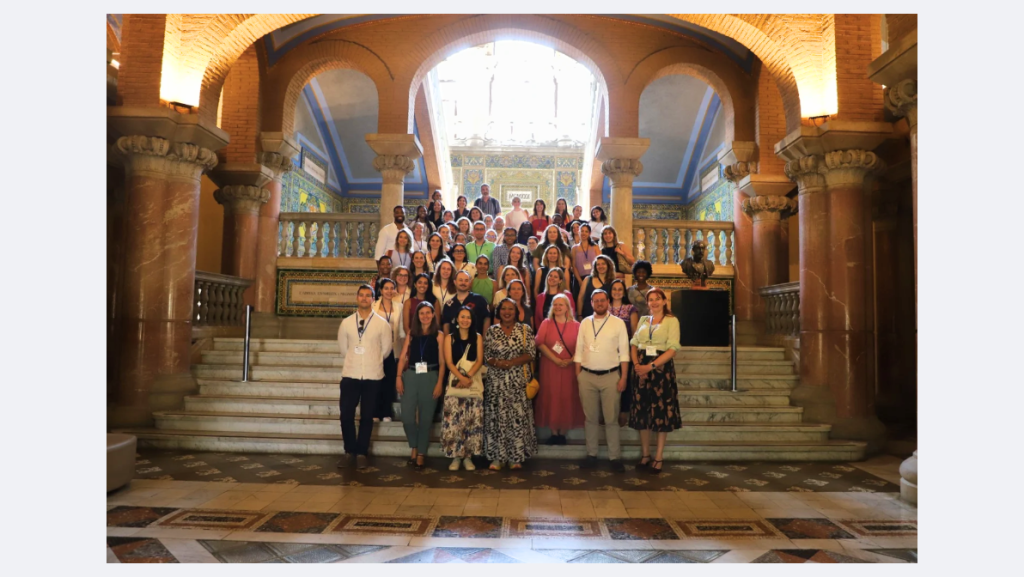
As I reflect on the 2025 Global Inclusion Regional Summit, I’m filled with gratitude, energy, and a deep sense of purpose. My hope going into this event was that attendees would leave feeling affirmed in their work, inspired by their peers, and better equipped to champion equity in all areas of global learning—and while I can only speak for my own experience, I truly believe that hope was realized.
Over two days, we engaged in powerful plenaries, hands-on breakout sessions, and meaningful informal conversations. Our plenary panels offered insightful, cross-sector perspectives and featured student voices that reminded us exactly why this work matters. I was especially moved by the students who spoke candidly about how their time in Barcelona is shaping their worldview, confidence, and future ambitions. Their presence and their honesty were a powerful reminder that while we often speak about the impact of global education, hearing it directly from students is transformative.
To kick off the list of people to whom I want to give special thanks, is to our plenary speakers and moderators, who anchored our summit with powerful dialogue, regional insights, and visionary ideas:
DEI Without the Acronym: European Approaches to Equity & Inclusion in Global Education: a conversation moderated by Andrew J. Gordon (DA Global Access Network), and invited speakers Marcelle Laliberté (HEC Paris), and Eva Pujadas Capdevila (Universitat de Pompeu Fabra) who shared expertise on ways to develop and embed inclusive practices in the structure of our programs in a way that honors the unique audiences that they serve.
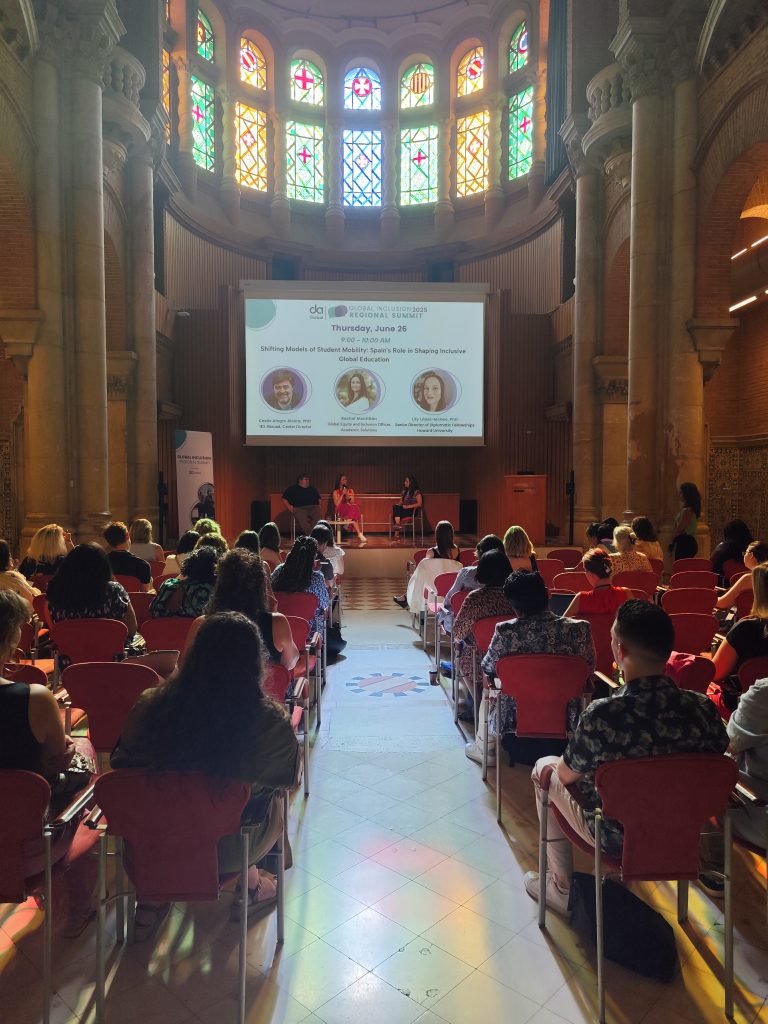
Shifting Models of Student Mobility: Spain’s Role in Shaping Inclusive Global Education: a panel moderated by Lily López-McGee, PhD (Howard University), and featuring insightful commentary from Cèsar Alegre Alsina, PhD (IES Abroad), and Rachel Mantiñán (Academic Solutions), two professionals with experience spanning throughout the USA and Spain.
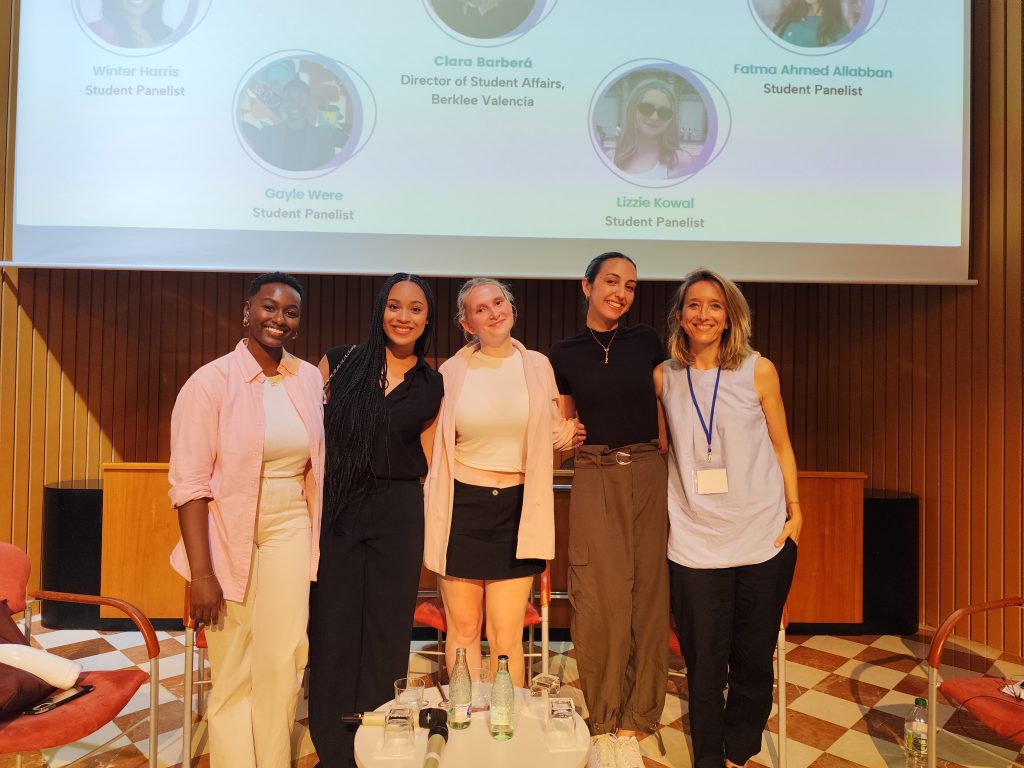
Students at the Center: Rethinking Global Education Through Their Eyes: a discussion expertly moderated by Clara Barbera (Berklee Valencia) and highlighting the experiences of Lizzie Kowal (CEA CAPA Intern), Winter Harris (CEA CAPA Intern), Gayle Were (IE University Alumni) and Fatma Ahmed (American University of Cairo).
I also want to give a heartfelt thank you to all of our concurrent session presenters. Your sessions were thoughtful, well-organized, and deeply engaging. Attendees recanted the impactfulness and practicality of the sessions, from frameworks shared to resources offered to the honest and collaborative discussions you facilitated. The strength of the breakout sessions is what makes this summit a truly participatory learning space, and your contributions brought that vision to life.
Outside of sessions, I was thrilled to see attendees building connections over coffee, during receptions, and in the quieter moments between panels. These relationships, new and renewed, create meaningful communities.
As I continue my post of reflection and gratitude, I would like to be sure to recognize a few organizations and individuals.
Barcelona SAE, for their continued partnership and support—not just for this summit, but for our global community at large.
Our planning committee members, who contributed not only to outreach and vision, but also served as speakers, moderators, and facilitators of important dialogue.
The incredible team at DA Global Access Network, who helped curate the program and supported the event from afar.
And the wonderful student volunteers, who offered their time and energy to ensure things ran smoothly—and whose reflections reminded me why I’m committed to this work.
Speaking with these students between sessions was grounding. In a time when international education faces political and structural threats, particularly in the U.S., hearing about their growth, resilience, and curiosity reignited my sense of mission. Yes, some may spend weekends hopping from city to city, and yes, their studies may occasionally compete with the thrill of cultural discovery—but they are learning in ways that stretch far beyond the classroom. They are building adaptability, cultural awareness, and global citizenship with every train ride, every group project, and every language barrier overcome.
As we move forward in the year and further these conversations in the international education community throughout various avenues and spaces, I hope we continue to ask ourselves:
How can we harness innovation to expand access to global learning?
What does meaningful collaboration across institutions, sectors, and regions truly look like?
And how do we sustain inclusive practices amid changing political and institutional landscapes?
We look forward to continuing these conversations with you in the months ahead and hope to connect again through future gatherings—such as the upcoming Global Impact Conference and the inaugural Global Education Technology Summit (GETS)—as we collectively explore what’s next for our field.
To all of you who joined us, from a short metro ride away to a 10-hour flight—thank you. Your commitment to global inclusion and student success continues to inspire. I look forward to the collaborations, innovations, and collective impact that will grow from this experience.
This community agrreement applies to all DA Global Access Network events, networking sessions, and professional development opportunities both virtual and onsite.
DA Global Access Network is committed to creating and maintaining an inclusive, welcoming, and respectful environment for all participants. We welcome all individuals with a shared goal of expanding access to opportunity for both students and professionals by levearaging the benefits of global education. We expect all members of our community to engage with integrity, empathy, and a willingness to learn.
DA Global Access Network does not tolerate any form of discrimination, harassment, or exclusionary behavior based on (but not limited to): race, color, religion or belief, national, social or ethnic origin, sex, disability, sexual orientation, gender expression, or veteran status.
This agreement applies to all participants, including attendees, speakers, presenters, students, staff, and volunteers.
Core Principles
Respectful Engagement
Approach all interactions with openness, active listening, and a willingness to understand perspectives different from your own.
Refrain from interrupting or dominating conversations.
Challenge ideas, not people. Engage in dialogue that is constructive and solution-oriented.
Respect different communication styles and cultural norms.
Challenge by Choice
Participants are encouraged, but not required, to step out of their comfort zones to foster personal and collective growth.
No one will be forced to share or disclose personal experiences.
We honor each person’s right to participate in ways that feel safe and appropriate for them.
Accountability & Growth
If someone shares that your words or actions have caused harm, listen with humility and reflect before responding.
Be open to learning from feedback and adapting your behavior accordingly.
Extend grace to yourself and others—everyone is at a different point on their learning journey.
If you have any questions or thoughts about this community agreement, we encourage you to reach out to us at members@daglobal.org
Please read the instructions carefully before moving on to register for the event. The registration options on this page are meant exclusively for DA Global member institutions and affliated individuals. For more information on how to become a DA Global member, please visit our webpage. For information on the Global Impact Conference and related events, please visit here.
The Full Access Pass registration includes access to the virtual sessions on October 8 -9, 2025. It also includes one light breakfast, one dinner, and several light refreshment breaks throughout the in-person conference. During the registration process you will be able to indicate any dietary restrictions. Although these meals are included, we ask that you RSVP to the complimentary events to avoid any excessive food waste.
The Full Access Pass does not include entrance to the Gloabal Education Technology Summit (GETS) which takes place in advance of the 2025 Global Impact Conference. Admission to GETS can be purchased in conjunction with the Full Access Pass to GIC or may be purchased alone.
To learn more about admission items, conference sessions, special events or our cancellation/refund policy, please reference our main conference page here. Please use the buttons below to select the admission item that you would like to register for.
MEMBER REGISTRATION INSTRUCTIONS Step 1: Choose your admission item.
Step 2: Fill in the requested details.
Step 3: Select payment option.
Step 4: Receive registration confirmation.
MEMBER GROUP DISCOUNTS Please note that five or more individuals from one institution/organization entity must register for the same registrant type (i.e., 5 member full conference registrations). The 10% discount will only be applied to the full conference registration types Full Access. The discount is only valid for individuals registering for the same registration type. For any questions, please contact conference@daglobal.org
This article is part of a limited-release, peer-reviewed series on “Sustaining Commitment to Inclusive Excellence in Times of Political Challenges to Diversity, Equity, and Inclusion” presented by DA Global Access Network. These featured works spotlight timely research and perspectives that support inclusive student success and the evolving impact of international education.
April 7, 2025
By Meagan O’Malley, Graduate Student, George Washington University
Introduction
Using a qualitative method and interpretative thematic analysis, this exploratory study identifies Florida faculty perceptions of how ‘divisive concepts’ legislation, including anti-Diversity, Equity, and Inclusion (DEI) and anti-Critical Race Theory (CRT) legislation, impact the Florida higher education landscape, particularly as it relates to international education and global competencies. The study uses Florida universities as a case study for a broader political project occurring in the U.S. Through semi-structured interviews with faculty, findings emerged in four areas: overall climate at Florida public higher education institutions, curriculum and instruction, international student experience, and faculty perspectives of the future. The literature suggests that recent legislation in Florida could have implications for students’ potential to experience an inclusive, transformative, and global learning environment. After speaking to Florida faculty, findings from this study support this notion, as faculty suggested students have fewer conversations about the implications of social inequity and decreased ability to think things through critically, both of which are important for an inclusive and transformative learning environment.
Research Questions
This study explores the implications of ‘divisive concepts’ legislation on international higher education, including internationalization and global learning efforts. First, I examined existing literature to see what connections and intersections between CRT, DEI, and global learning are already established. After this, I explored the specific case of Florida, one of many states in the U.S. experiencing anti-DEI and anti-CRT measures. I investigated faculty perceptions of this legislation and its impacts, particularly as it relates to global learning.
What are the intersections of CRT, DEI, and international education or global learning?
In the current political climate in Florida, how does the legislative landscape impact faculty experiences with these intersections?
What are the implications of the current legislative climate in Florida on the broader higher education and international education landscape?
Literature Review Findings
The literature review underlined the importance of DEI and internationalization initiatives to address social injustices and inequities and to cultivate global competence among learners. However, the literature revealed several challenges with these endeavors, notably a rise of anti-DEI and anti-CRT rhetoric and legislation. Many states in the U.S. are currently facing anti-DEI and anti-CRT legislation, including the state of Florida. In four states- North Carolina, Florida, Tennessee, and Texas- “legislation has created great confusion about what educators and institutions can do or say” (Kamola, 2024, p. 66). Anderson (2023) describes how legislation regarding ‘divisive concepts’ legislation in Tennessee affects teachers. Anderson finds that teachers may self-censor the kinds of books they keep in the classroom and may self-censor by avoiding controversial topics, creating “a climate of additional stress for educators” (171). The literature also highlights the interconnectedness of DEI and internationalization, arguing that progress or setbacks in one effort may have implications for the other. In conclusion, the literature suggests that recent legislation in Florida could have implications for students’ potential to experience an inclusive, transformative, and global learning environment.
Summary of Findings from Faculty Interviews
My analysis steps included:
Read through and mark the data from faculty interviews according to four predetermined categories: overall climate at Florida universities, curriculum and instruction, international student recruitment and experience, and faculty perspectives of the future.
After marking the data, look for patterns, relationships, and themes to generate meaning.
Create memos that “describe potential insights that seem to be emerging” (Hatch, 2023, p. 226).
Key findings are summarized in the table below:
Overall Climate
– Sense of concern for faculty academic freedom and students’ quality of education – Feelings of surveillance – Navigating confusion and contradictions
Curriculum and Instruction
– Oversimplification of complex issues – Need to change public-facing language to avoid scrutiny, even if overall concepts learned inside the classroom remain largely unchanged
International Student Experience
– International students may perceive FL as a less welcoming state, or they may not be well versed in inter-state differences – International students’ perspectives are important, especially in a time where critical discussions of difference are limited
Faculty Perspectives of the Future
– Potential for impacts on international student enrollment – Need for faculty to continue incorporating best practices in the field and to understand the legislation – Continue to advocate for culturally diverse students
Discussion
CRT, DEI, and global learning are often tied together through themes of a social justice lens, transformative learning, and the importance of encountering differences in perspectives. The findings from the interviews suggest more intersections between these areas. First, one participant highlights the importance of international students contributing to offering diverse, outside perspectives. In a higher education environment where there is ‘backlash against any kind of critical discussion’, international students’ ability to provide their perspectives and insights grows more valuable. However, some of the interview participants suggest that the current legislative climate in Florida may be unwelcoming for international students. Therefore, international students continue to be valuable to the Florida higher education system without the higher education system making them feel valued in return. Lastly, interview findings indicate that college students are facing an ‘oversimplification of issues. ’ When the very role of internationalization and global learning includes preparing students for an increasingly complex world, could legislation in Florida and other U.S. states hinder this preparation?
The main themes that arose among faculty when asked about their experiences were feeling an environment of surveillance and confusion, which can lead to self-censoring to avoid any scrutiny. From the interviews with faculty, I also can conclude that the legislative landscape leaves faculty in an increasingly stressful environment, but also may leave additional work for them. Many strategies used by faculty involve changing public-facing language or adding disclaimers, but this adds additional work and caution. Moreover, as faculty may leave their positions or leave the state, additional administrative tasks fall on remaining faculty. Finally, the faculty interviewed commonly expressed concern for their students and their ability to receive a high-quality education.
Schoorman and Gaten (2024) list recommendations for educators, including reading and understanding legislation’s explicit and implicit purposes, committing to educational equity for diverse students, and educating legislators who make decisions on education. My study yields similar recommendations from faculty moving forward: continuing to teach best practices, continuing to advocate for culturally diverse students, and having an understanding of the legislation in order to avoid self-censorship. It is also important to note that many faculty may not be changing what they do or changing the content they teach, or changes made may be merely surface-level, such as changing names of concepts or changing public-facing language. Therefore, the work may continue under these adaptations.
Bourn (2021) asks us to question the very function and role of education, particularly after a pandemic, the Black Lives Matter movement in the U.S., and the global challenges we face, such as climate change. Ultimately, education must remain an environment for dialogue and critical reflection to ensure it successfully equips students for the complexities of a globalized world. Without these qualities of criticality and transformative growth, the broader role and mission of higher education is at risk of being compromised. Facing ‘divisive concepts’ legislation and the pressures that emerge with it, educators and higher education institutions must uphold the values of equity, diversity, and critical inquiry, maintaining an educational space that prepares students to challenge global injustices and address global issues.
References
Anderson, L. (2023). “Divisive Concepts” Legislation Reaching into Tennessee Secondary Classrooms Has “Chilling Effect” on Teachers. Multicultural Perspectives, 25(3), 170-175.
Bourn, D. (2021). Pedagogy of hope: global learning and the future of education. International Journal of Development Education and Global Learning, 13(2), 65-78.
Hatch, J. A. (2023). Doing qualitative research in education settings. State University of New York Press.
Kamola, I. (2024). Manufacturing Backlash: Right-Wing Think Tanks and Legislative Attacks on Higher Education, 2021-2023. American Association of University Professors.
Schoorman, D., and Gatens. R. (2024). Understanding Florida’s HB7: A Policy of Intimidation by Confusion. Educational Policy, 00(0), 1-30.
This article is part of a limited-release, peer-reviewed series on “Sustaining Commitment to Inclusive Excellence in Times of Political Challenges to Diversity, Equity, and Inclusion” presented by DA Global Access Network. These featured works spotlight timely research and perspectives that support inclusive student success and the evolving impact of international education.
April 7, 2025
By Joy Donnelly, Executive Director of Joy Worldwide Inc.
Transformative joy happens when a positive experience sparks holistic growth, leading to expanded perspectives, improved outcomes, and changed life trajectories. Many people encounter transformative joy through art, music, sports, or fashion—experiences that are widely acknowledged as essential to personal development. Yet, one powerful medium often overlooked in this conversation is travel.
Historically, travel has been seen as a privilege, not a fundamental part of education or self-actualization. While studying abroad can formalize international education and provide access to diverse cultures, travel has long been inaccessible to those without the financial means or systemic advantages to support it. As the world evolves, it’s crucial that we shift our mindset to recognize the transformative power of travel—not just for career growth but for the personal and communal enrichment it offers.
The Necessity of Travel for Diverse Communities
Travel is especially vital for diverse communities in the United States, where generations of struggle, resistance, and survival against systemic oppression have shaped much of the cultural fabric. With these communities often marginalized and confined to limited perspectives, the opportunity to travel can offer a powerful antidote to stagnation.
Exposure to global ideas can break down limiting ideologies, foster healthier lifestyles, increased political involvement, more dynamic family structures, and a stronger commitment to sustainability. These lessons, drawn from my travel experiences, show how travel can catalyze personal growth and societal transformation, especially for future generations.
Healthier Lifestyles: Broader Views on Well-Being
Travel broadens our understanding of health and wellness. While abroad, I observed how different cultures relate to food, physical activity, rest, and healthcare. These lessons helped me take greater responsibility for my health upon returning to the U.S. Travel offers the opportunity to learn different approaches to well-being that can profoundly impact individual lifestyles and broader public health outcomes.
Political Involvement: Global Lessons in Civic Engagement
While studying in Paris, I was introduced to the Gilets Jaunes (Yellow Vests) movement, which emerged in response to rising fuel prices, economic inequality, and social unrest. Despite the movement’s occasional unrest, it underscored the importance of political participation and the power of collective action.
Witnessing this firsthand highlighted how travel can provide valuable lessons in political engagement. With Gen Z increasingly mobilizing through social media and advocating for change, global exposure can teach young people how to organize, demonstrate, and hold governments accountable. Learning about different political systems abroad enriches one’s understanding of how to effectively contribute to civic life, fostering a more politically engaged society.
Sustainability: Embracing Global Practices
Many communities I encountered abroad had integrated sustainability into everyday life. From zero-waste initiatives to renewable energy sources, sustainability was not just a concept—it was a lived experience. These practices inspired me to adopt eco-friendly habits in my own life.
By promoting access to travel, we can equip future generations with a broader understanding of environmental responsibility. This exposure helps individuals see how sustainability practices can be adopted at the local level and encourages them to push for systemic change in their own communities.
Familial Structures: Rethinking Family Dynamics
Another key takeaway from my time abroad was the stark contrast in how different cultures approach family structures. In Milan, I discovered that many young adults continue living with their parents well into adulthood. This stood in contrast to the American norm of independence and moving out at 18.
This cultural difference led me to reflect on how a more interdependent family structure could benefit society. If we normalized living with extended families, we could strengthen intergenerational bonds, reduce financial strain, and improve caregiving for children and elders. Travel allows us to rethink and redefine how we structure support systems within families and communities.
Conclusion: Investing in Transformative Travel Experiences for All
To ensure travel opportunities are accessible to all, we need targeted solutions:
Private Donors and Foundations: Philanthropic organizations and individual donors can contribute to travel scholarships and funding, ensuring that all have the financial support to participate in transformative travel experiences.
Corporate Partnerships: Companies with strong CSR initiatives can collaborate with schools or nonprofits to fund travel, offering internships, exchanges, and networking opportunities.
Community-Based Initiatives: Local governments and nonprofits can create programs that provide educational trips, cultural exchanges, and leadership training.
By investing in transformative travel experiences, we ensure that all people have the chance to experience transformative joy through travel and we can cultivate a future generation that is more empathetic, informed, and equipped to tackle the challenges of tomorrow.
Title: Sustainability in Action: Integrating SDGs into International Education
Presenters:
Sean Reilly, AFS
Saskia Kaya, AFS
Description:
Integrating Sustainable Development Goals (SDGs) into international education programs enhances their global impact. This session explores how SDG-focused curricula prepare students and educators for responsible and informed global citizenship..
Discuss how SDGs can be seamlessly integrated into curriculum and program design.
Highlight the value of aligning international education goals with global sustainability objectives.
Share examples of collaborative projects or community engagement initiatives tied to SDGs.
Explore the benefits of preparing students with sustainability-focused learning outcomes.
Title: Identity & Inclusion at the Crossroads: Involving Students in the Development of Practical Support Strategies in the European Context
Leadra Reeves, CASA Granada Spring ’24 Alum & Travel Grant Awardee
Dani Kaufman-Sedano, CASA Granada Spring ’23 Alum & Travel Grant Awardee
Description:
Join a seasoned study abroad director and two program alums as they share their stories, effective strategies, easy-to-implement practices, and the measurable outcomes that result from incorporating student voices in the development of inclusive support services onsite. In this deep-dive session, we invite you to engage in the exercise of validating the lived experiences of recent graduates whose identities span a range of both visible and invisible identities that we often encounter among our student cohorts, and of translating those experiences into concrete strategies. More specifically, based on both research findings and direct personal experiences, we will:
Come to a comprehensive understanding of inclusion, drawing from the different approaches utilized in Europe and the U.S., and the lived experiences of our students at this crossroads, and use it as the foundation for building inclusive programs and practices.
Explore the importance and the impact of inclusive approaches in academic and cultural adjustment support on students’ overall wellbeing and personal growth.
Identify specific challenges that students of varying identities face while studying abroad in Europe, with a particular focus on students of low-income backgrounds, Black students, LGBTQ+ students, and students of different religious backgrounds.
Discuss intentional support services/resources that study abroad programs can provide for diverse student populations in close collaboration with their host partners – institutions, host families, faculty, community organizations – and how to approach potential obstacles that may surface.
Engage with the process of developing, implementing and evaluating the success of inclusive initiatives, and measuring the direct impact on your students and the future of your program!
Title: From Abroad to Beyond: Turning European Experiences into Career Success
Presenters:
Nicola Sullivan, AIFS
Maya Edwards, AIFS
Description:
Global education experiences in Europe equip students with unique skills for careers in public and private sectors. This session highlights how these experiences translate into employability and career preparedness.
Explore how global education in Europe impacts students’ employability and career preparedness.
Identify transferable skills developed through international education and their alignment with workforce demands.
Discuss reverse culture shock and strategies to leverage the abroad experience professionally.
Showcase alumni success stories to inspire future students.
Concurrent Session Block 3
The Role of the Global University in Navigating Conflict, Dialogue, Transformation — How campuses cultivate dialogue, resilience, and civic readiness amid geopolitical tension while keeping learning and community at the center.
Partnerships that Drive Real Collaboration & Innovation — Models that move beyond finance-only deals to co-created programs, research, and talent pathways linking MENA and global institutions.
Concurrent Session Block 2
Making the Student Success Case for International Education to Campus Leadership — How to build deeper support for global learning among campus leadership by framing international education as a key driver to improving student success.
Inclusion in MENA: Narratives, Demographics & Opportunity — Public narratives about MENA are often formed at a distance. This session examines inclusion through societal trends and the policy frameworks that enable openness and stability.
The Value of International & Experiential Study Through the Lens of Global Employers — What employers say global and experiential learning uniquely delivers, from teamwork across cultures to problem-solving on real projects.
Concurrent Session Block 1
Preparing Today’s International Students for Tomorrow’s Workforce — How institutions align global and experiential learning along with employer partnerships so international students translate global study into career readiness and impact.
Unique Mental Health & Wellbeing Considerations for Study to & from MENA — Culturally grounded approaches that support student wellbeing across languages, faith, family expectations, and cross-border transitions.
Tech for Global Education: What’s Actually Working? — Practical, people-first uses of digital tools that expand reach, improve student support, and strengthen collaboration without turning staff into technologists.