

Global Impact Exchange Summer 2021 Edition
Exploring Opportunities for Global Engagement Within Local Communities
As technology and globalization continue to connect people all around the world, opportunities to connect with people of different backgrounds and cultures have become much more accessible. It is no longer necessary to go abroad to have a global experience. Global engagement can occur at “home” by connecting students, faculty, and staff with the diverse people, groups, businesses, and events within their local communities. What partnerships can be developed by faculty and staff with local businesses and leaders to advance global diversity, equity, and inclusion? How can technology be leveraged to connect students from around the world to learn from one another and foster deeper connections? Are there ways to connect the benefits of global education to opportunities to serve one’s local community? How can understanding diversity, equity, and inclusion within one’s local community assist in understanding those topics within the wider global community? In what ways can engaging with the global community at home be a stepping stone to pursuing a global engagement opportunity abroad in the future?
Acknowledgements
A special thank-you to members of the Diversity Abroad consortium for supporting thought leadership at the intersection of global education and diversity, equity, and inclusion.
Introduction

Lizzie Monroe
Associate Director of Learning & Development, Diversity Abroad
If my work in diversity, equity, and inclusion has taught me anything, it is that we must go beyond the idea of “normalcy.” Many implicit bias trainings center critical reflection of our internalized construct of “normal.” Whether that’s unconsciously assigning a generalized archetype of a student studying abroad or an employee impacted by a policy, ascribing to the idea that there can be a “normal” student, colleague, friend, etc. implies the existence and exclusion of one that is “abnormal” or “other.” Part of our work toward a more equitable future is to disrupt the notion that there can be a normal when discussing people, our identities, and our lived experiences. Therefore, as our doors reopen, let’s extend this skepticism of the word and take pause before determining that “back to normal” is the goal. If the pandemic has shown us anything, it is that we cannot go back to normal. It is becoming increasingly acknowledged that based on our identities, we may experience the same cities and even neighborhoods with entirely different realities, requiring us to understand the different lived experiences of our neighbors. There is heightened awareness of issues within public health and the fragility of public infrastructure, offering opportunities for increased awareness of and empathy for conditions of others that were previously overlooked and ignored. Now that we have spent the past year in these discussions, how do we keep this focus and center it in our creation of a “new normal” in global education?
The Summer issue of the Global Impact Exchange offers new visions for global education, moving beyond mobility and exploring opportunities for global engagement within local communities. Colleagues from the field provide insights, best practices, and frameworks for what constitutes global engagement. What does it mean to have global engagement at home? How can we connect with people of different backgrounds and cultures “at home”?
Several articles explore how and why global education can and should interact with one’s local community. Continuing to center issues of diversity, equity, and inclusion, this issue also grapples with the potential benefits and dangers of technology as a tool for global engagement opportunities. For example, as virtual programs and hybrid models are brought into our new normal, how might these formats increase opportunities for certain populations, and conversely, what inequities are we at risk of creating and reproducing when leveraging technology as a tool for global engagement?
We hope these articles help and inspire you to continue to disrupt our constructs of normal in imagining this new normal, and we look forward to continuing this discussion online or in person in Atlanta in October at Global Inclusion 2021— the annual Diversity Abroad conference.
We look forward to your engagement with this edition of the Global Impact Exchange and want to hear your thoughts. Please share your reflections and ideas with us on LinkedIn @diversityabroad and members@diversityabroad.org. Diversity Abroad members are invited to join the conversation on the online community forums.
Editorial Board
The main task of the Editorial Advisory Board is to review article submissions for the Diversity Abroad Quarterly publication. While not a peer-reviewed academic journal, the Diversity Abroad Quarterly publication compiles articles to advance domestic and international conversations around diversity, inclusion, and equity in global education with respect to the thematic focus identified each quarter.
- Shakeer A. Abdullah, PhD | Vice President of Affairs, Clayton State University
- Shannon P. Marques, PhD | Dean of Undergraduate Global Engagement, Columbia University
- Vivian-Lee Nyitray, PhD | Associate Vice Provost and Executive Director, University of California Education Abroad Program
- Paloma Rodriguez | Director, Office of Global Learning, University of Florida
Table of Contents
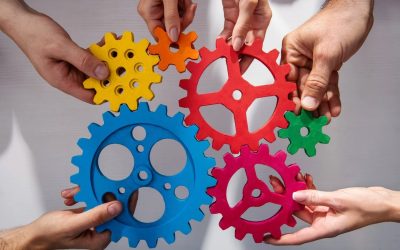
Developing a Globalized Localism Model and Practice for Social Justice
Often, local and global efforts in international education are seen as separate, as if they exist at opposite ends of a spectrum. However, we believe these efforts should be integrated, merging the local with the global, theory with practice, and pedagogical models with real-world applications.
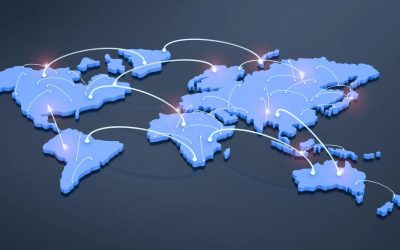
How Necessity Creates Opportunity: Equalizing Transnational Higher Education
This article explores the potential of transnational partnerships in higher education to increase access and equity in international education, especially in the context of the COVID-19 pandemic. It emphasizes the transformative opportunities these partnerships create for both students and institutions, including deeper academic and cultural exchanges, particularly for students who traditionally lack access to study abroad programs.
‘Connecting Globally while Grounded at Home’: The ASC Experience
This article discusses Agnes Scott College’s creative approach to maintaining global learning opportunities during the COVID-19 pandemic, specifically through a virtual global cultural immersion program.

Transatlantic Virtual Exchange and Collaboration: Examining Diversity
This article highlights the Trans-Atlantic Virtual Exchange and Collaboration (TAVEC) project, a partnership between Hochschule Fresenius in Germany and Adelphi University in the United States that emerged during the COVID-19 pandemic. The collaboration aimed to offer students opportunities for intercultural exchange while physical mobility was restricted. Business school students from both institutions worked together to research and compare the cultural, historical, and legal aspects of diversity in their countries.

Global Student Projects as a Catalyst for Social Engagement: Findings from a Brazilian-American Collaboration
This paper discusses the role of Collaborative Online International Learning (COIL) projects in fostering Global Citizenship Education by connecting students across borders to address global issues like online gender violence. The collaboration between Florida International University (USA) and Fatec São Paulo (Brazil) enabled students to explore gender-based violence in online spaces.
COVID-19: A catalyst for rethinking global engagement
The COVID-19 pandemic shifted global education from mobility to local community engagement, emphasizing diversity and interdependence. At Elon University, programs like Multifaith Scholars, Periclean Scholars, and the Interactive Media graduate course adapted by focusing on local partnerships while maintaining global learning goals.

Seeking Global Equity and Engagement in Community With Our Newest Neighbors
As global educators, we must refocus on the ‘why’ of international education, especially after the COVID-19 pandemic. By fostering local-global connections and supporting marginalized communities, we can offer meaningful learning experiences that promote equity.
Approaching Virtual Exchange from an Equity Lens
In this article, we will connect effective AIDE practices, with an emphasis on equity, in virtual exchange to efforts we have seen implemented in Stevens Initiative programming, pointing towards specific virtual exchange programs or Initiative-led efforts that model these effective practices.
The UN Sustainable Development Goals as a Bridge Between Global Learning and Local Action
The United Nations 2030 Agenda for Sustainable Development highlights 17 SDGs aimed at addressing global challenges like poverty, climate change, and inequality. These goals provide a framework for bridging global and local learning in education.

Back to Basics in Education Abroad: A Case for Language & Culture Programs
The COVID-19 pause offers a chance to refocus education abroad on language and culture programs. Online learning enhances language acquisition, while connecting study abroad to local communities deepens cultural understanding. Focusing on language skills for careers boosts employability, and intercultural knowledge prepares students for a global workforce. This shift can make study abroad more impactful and relevant.

Going Global Without Going Abroad
Texas Woman’s University’s “Building Global Perspectives in the Humanities” project focuses on fostering global citizenship through local engagement. Aimed at increasing accessibility for economically disadvantaged students, the program emphasizes experiential learning and self-awareness to help students understand their role in global systems.